A Strategic Framework for Informed Decision-Making
Introduction: Why This Opportunity Matters to Investors

Abu Dhabi’s residential property market has entered a phase that is increasingly drawing the attention of regional and international investors. Not because of short-term hype or isolated project launches, but due to a combination of structural demand drivers, evolving buyer profiles, and a maturing regulatory environment.
For serious investors, however, opportunity is rarely defined by headlines alone. What matters is how the market behaves beneath the surface: the interaction between supply timing and absorption, the depth of end-user demand, the resilience of rental markets, and the practical realities of exiting an investment when conditions change.
This article is written as a strategic briefing rather than a promotional overview. It outlines how professional investors evaluate property opportunities in Abu Dhabi, what data categories genuinely matter, and why surface-level public information is often insufficient on its own. The intent is not to present conclusions or recommendations, but to explain the investment thinking framework that underpins disciplined decision-making.
The insights referenced here draw on aggregated market research and multi-year residential pipeline analysis, without reproducing proprietary datasets or project-level figures.
The Investment Strategy Behind Smart Property Decisions
Professional real estate investors do not start with projects; they start with strategy.
Before considering any individual development, sophisticated investors typically define four foundational parameters:
- Investment Objective
Is the priority capital growth, income stability, capital preservation, or a blended outcome? Each objective implies a different risk tolerance and holding period. - Time Horizon
Short-term positioning, medium-term value creation, and long-term holding strategies behave very differently in a market like Abu Dhabi, particularly given the role of off-plan supply and phased delivery cycles. - Liquidity Expectations
Investors assess not only how to enter a position, but how and when they might exit. Liquidity is driven by depth of resale demand, unit typology, price point, and buyer demographics. - Risk Alignment
Market risk, execution risk, regulatory risk, and timing risk are evaluated collectively rather than in isolation.
Only once this strategic lens is clear does analysis move toward market data. Without it, even high-quality data can lead to misaligned decisions.
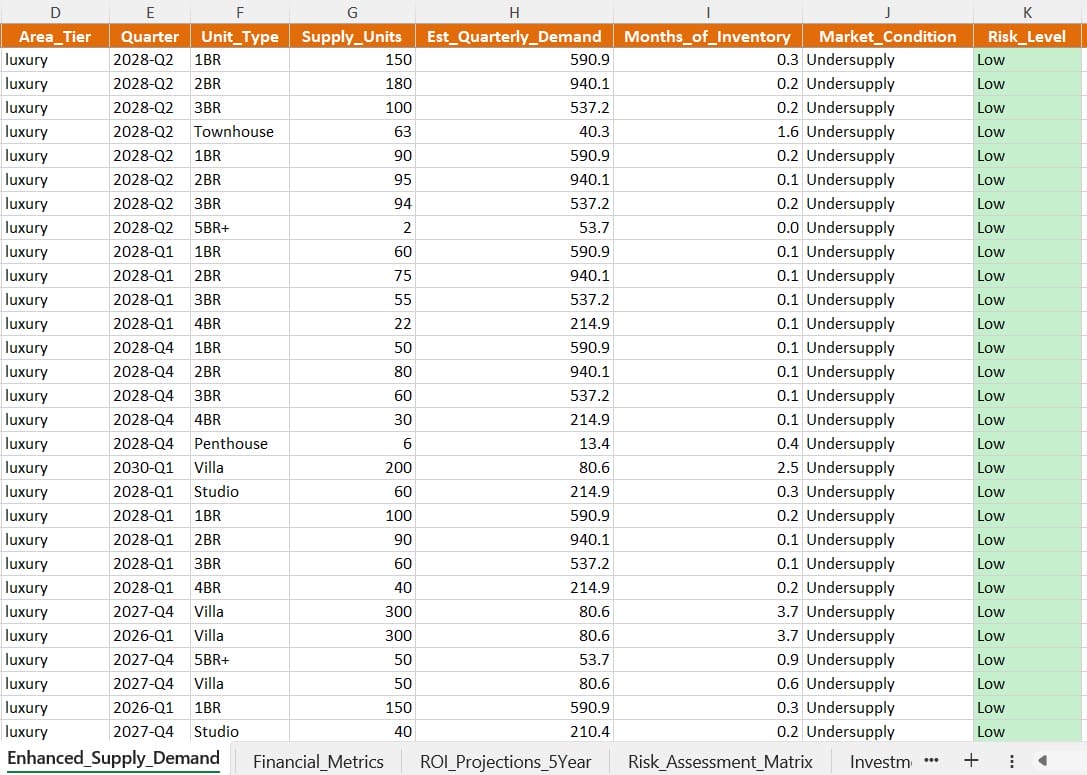
Sample Data Analysis carried by XIS Real Estate Advisory Team
What Data Actually Matters to Serious Investors
Public discussions around property markets often focus on headline indicators: average prices, annual growth rates, or total transaction volumes. While useful for context, these metrics alone rarely determine investment quality.
Professional investors tend to focus on categories of data, not isolated numbers.
1. Supply Timing, Not Just Supply Volume
Total future supply figures can be misleading if viewed in aggregate. What matters more is when supply is delivered and where it is concentrated.
Key considerations include:
- Delivery clustering by quarter or year
- Overlap between competing developments targeting similar buyer segments
- The relationship between scheduled completions and historical absorption capacity
A market may appear undersupplied overall, yet still experience pressure in specific periods or locations if delivery timing is poorly aligned with demand.
2. Absorption and Transaction Velocity
Absorption rates reveal how quickly the market has historically digested new inventory. More importantly, professionals examine:
- Absorption by unit type (not just by area)
- Differences between off-plan and completed inventory
- Stability of demand across economic cycles
Sustained absorption reflects genuine end-user or investor demand, rather than speculative turnover.
3. Rental Market Depth and Tenant Profiles
Rental yields are often discussed, but yield figures alone do not explain rental resilience.
Experienced investors look at:
- Tenant composition (professionals, families, transient populations)
- Employment drivers supporting rental demand
- Vacancy sensitivity during periods of new supply
A stable rental market can provide downside protection even when capital values fluctuate.
4. Exit Liquidity and Resale Demand
Liquidity is not uniform across the market. Certain unit types and price bands consistently outperform others when it comes to resale.
Liquidity analysis typically considers:
- Historical resale transaction frequency
- Buyer pool depth at different price points
- Mortgage accessibility and cash-buyer prevalence
An investment that performs well on paper may still underperform if exit conditions are constrained.
Key Risk Considerations Investors Often Overlook
Risk in real estate is rarely binary. It is cumulative, contextual, and often misunderstood.
Market Timing and Delivery Cycles
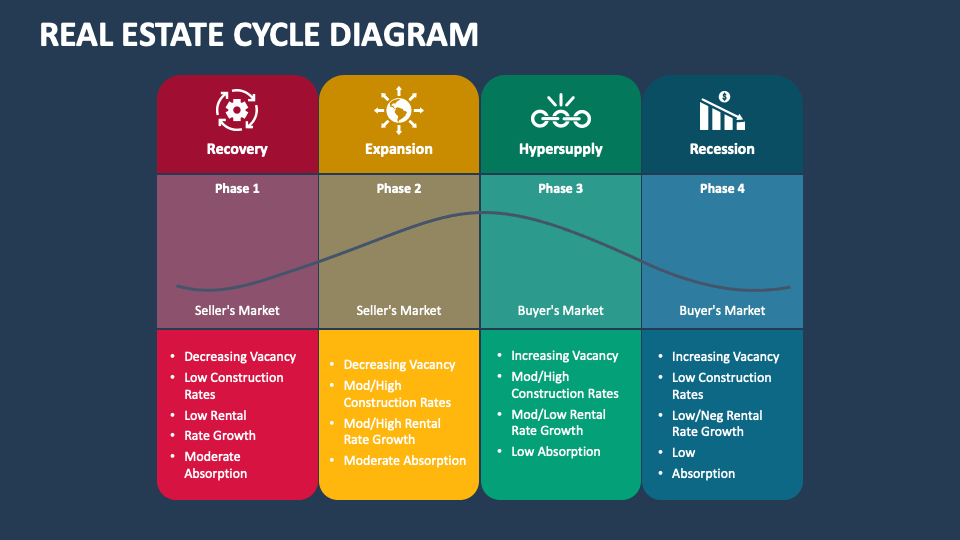
One of the most overlooked risks is entering a market at the wrong point in the delivery cycle. Even structurally strong markets experience phases where new completions temporarily outpace demand.
Investors who fail to account for delivery timing may face:
- Slower leasing periods
- Increased competition on resale
- Short-term price stagnation despite positive long-term fundamentals
Timing does not require predicting the market; it requires understanding supply schedules and demand absorption capacity.
Oversupply Is Often Local, Not Market-Wide
Oversupply rarely affects an entire emirate evenly. It tends to be highly localized, impacting specific communities, unit types, or price bands.
Risk increases when:
- Multiple developments target the same buyer profile simultaneously
- Unit layouts lack differentiation
- Developers compete primarily on incentives rather than intrinsic value
Granular analysis is essential to distinguish systemic risk from localized pressure.
Exit Liquidity Risk
Liquidity risk is not only about whether an asset can be sold, but how easily and at what cost.
Factors influencing liquidity include:
- Unit size and configuration
- Absolute ticket price
- Buyer demographics at exit
Highly specialised or premium assets may deliver strong long-term performance but require longer exit windows.
Regulatory and Delivery-Cycle Considerations
While Abu Dhabi benefits from a relatively stable regulatory framework, investors still assess:
- Escrow structures and delivery protections
- Developer track record and execution history
- Policy changes affecting residency, ownership, or financing
Regulatory risk is generally low, but it is not static.
Why Public Information Alone Is Not Enough
Online portals, market summaries, and headline reports play an important role in transparency. However, they have limitations that professional investors recognise quickly.
Aggregated Data Masks Variability
Publicly available statistics are typically averaged across wide areas and long periods. This can obscure:
- Micro-market differences
- Unit-level performance variation
- Timing-related risks
Investment decisions, however, are made at the asset level, not the market average.
Numbers Without Interpretation Create False Confidence
Data without context can be misleading. For example:
- High historical growth does not guarantee future performance
- Strong demand in one cycle may not repeat in another
- Attractive yields may reflect pricing risk rather than opportunity
Interpretation requires experience, not just access to information.
Strategy Alignment Is Investor-Specific
Two investors reviewing the same dataset may reach entirely different conclusions depending on:
- Risk tolerance
- Capital structure
- Time horizon
Public information cannot account for these individual variables.
How XIS Real Estate Approaches Investment Advisory
At XIS Real Estate, investment advisory is approached as a process, not a transaction.

The firm’s role is not to promote specific properties, but to help investors understand how opportunities align with their strategy and risk profile.
This approach typically involves:
- Translating complex market data into strategic insights
- Stress-testing opportunities against different scenarios
- Evaluating entry and exit positioning rather than headline appeal
- Identifying risks early, not explaining them after the fact
XIS operates on the principle that informed investors make better long-term decisions, even if that means advising restraint rather than action.
Conclusion: From Information to Informed Decisions
Abu Dhabi continues to present compelling opportunities for property investors, but opportunity alone does not equal suitability. The difference between a well-positioned investment and an exposed one often lies in how the decision was made, not which project was chosen.
Understanding supply timing, demand resilience, liquidity dynamics, and risk alignment requires more than surface-level research. It requires a structured framework, disciplined interpretation, and a willingness to look beyond promotional narratives.
For investors seeking a deeper, strategy-led discussion—one that goes beyond publicly available summaries—speaking with an experienced property advisor can provide clarity and perspective that raw data alone cannot.
Advisory-Led Call to Action
Investors who wish to explore how current Abu Dhabi market dynamics may align with their individual investment strategy can speak with an XIS Property Advisor for a confidential, analytical discussion focused on risk, timing, and long-term positioning.
Legal & Compliance Disclaimer
This article is provided for informational and educational purposes only. It does not constitute financial, legal, or investment advice, nor should it be relied upon as a complete basis for making any investment decision. Real estate investments involve risk, and market conditions may change. Readers should conduct independent due diligence and consult with appropriately licensed financial, legal, or professional advisors before making any investment decisions.